

At some point, eating stops being about rules and starts being about results.
How do you feel after a meal? How much energy do you have? How your body responds, not how a headline tells you it should respond.
The best diet for seniors isn’t trendy. It’s sustainable.
Let’s Clear This Up First
There is no single perfect diet for every senior.
Bodies age differently. Medical histories matter. Appetites change.
So instead of chasing perfection, the goal is this: Eat in a way that supports your body, your energy, and your peace of mind.
What Most Seniors Actually Need From Food
Regardless of the plan, most older adults benefit from:
- Enough protein to preserve muscle
- Easy-to-digest meals
- Stable blood sugar
- Foods that reduce inflammation
- Simple preparation
If a diet adds stress, confusion, or guilt, it’s not helping.
Mediterranean-Style Eating: Gentle and Balanced
Often recommended for a reason.
This approach emphasizes:
- Fish
- Vegetables
- Healthy fats like olive oil
- Moderate portions
It’s flexible, heart-friendly, and easier to maintain long-term.
Best for seniors who:
- Enjoy variety
- Cook occasionally
- Want balance without restriction
High-Protein Diets: Protecting Strength
As we age, muscle loss becomes a real concern.
Higher-protein diets focus on:
- Meat
- Fish
- Eggs
- Dairy or alternatives
Protein supports:
- Strength
- Balance
- Recovery
Best for seniors who:
- Want to maintain independence
- Are active or rebuilding strength
- Struggle with fatigue
Lower-Carb or Reduced-Sugar Eating
Many seniors notice improvement when sugar and refined carbs are reduced.
Benefits may include:
- More stable energy
- Better blood sugar control
- Reduced inflammation
This doesn’t mean zero carbs. It means intentional ones.
Best for seniors managing:
- Diabetes
- Prediabetes
- Energy crashes
Soft-Food and Easy-Chew Diets
Dental issues, digestion, or fatigue can make chewing difficult.
This approach focuses on:
- Soups
- Stews
- Slow-cooked meats
- Mashed or blended foods
Nutrition still matters, even when texture changes.
Best for seniors with:
- Dental challenges
- Swallowing issues
- Low appetite
The Anti-Inflammatory Approach
Some foods quietly worsen joint pain, stiffness, and discomfort.
An anti-inflammatory style favors:
- Whole foods
- Healthy fats
- Fewer processed items
Many seniors notice reduced pain and better mobility over time.
Diets That Often Don’t Work Long-Term
Highly restrictive plans can backfire.
Watch out for diets that:
- Eliminate entire food groups without reason
- Require constant tracking
- Create fear around eating
Peace around food matters as much as nutrition.
When Medical Needs Come First
Certain conditions require specific guidance:
- Kidney disease
- Heart conditions
- Digestive disorders
In these cases, personalization matters more than trends.
The Best Diet Is the One You’ll Keep
The most effective diet:
- Fits your energy level
- Matches your lifestyle
- Feels supportive, not punishing
If it nourishes your body and your sense of calm, it’s doing its job.
A Seniorlicious Reminder
You don’t need to eat like you’re 30.
You need to eat like someone who knows their body.
Listen. Adjust. Choose what helps you feel steady and strong.
That’s not giving up. That’s living well, right where you are.
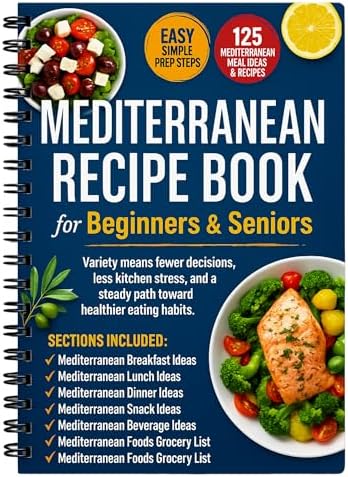
- 🌿 Simple & Easy Mediterranean Diet Design – Clean white and blue pages with olive leaves and lemon illustrations create …
- 🍽️ Mediterranean Diet Book for Beginners & Seniors – Features a simple step-by-step layout for writing your own recipes,…
- 🖋️ Large A4 Format (8.5″ × 11″) – Spacious pages provide plenty of room to record ingredients, directions, and meal plan…